
Repairs
Killing the termites doesn’t put the wood back. We cut out what they ate, fit new lumber, and leave you with a sill, a beam or an eave you can lean on.
Pest damage is sneaky. Paint and stucco hold their shape long after the wood behind them is gone, so the part you can see is often the small part. A repair starts with a screwdriver and a flashlight: probe outward from the soft spot until the wood is sound on every side, then mark what has to go.
After that it’s carpentry. The damaged piece comes out, the cut goes back to solid lumber, and the new piece is joined, fastened and primed so water can’t start the rot all over again. Where a leak or a planter fed the trouble, fixing that comes first.
What the Damage Says
Each pest leaves its own mess. Match what you found to the row and you’ll have a fair idea of the job.
| Damage found | Pest behind it | Repair work involved |
|---|---|---|
| Soft or hollow wood at sills and trim | Drywood or subterranean termites, sometimes plain rot | Probe to sound wood, splice or replace the piece, seal the joints and prime |
| Termite-damaged framing or subfloor | Usually subterranean termites coming up from the soil | Treat first, then replace or sister joists and plates and patch the subfloor |
| Chewed vent screens and gaps around wires | Rats and mice | New screen fastened to sound wood, gaps packed and covered |
| Rodent-damaged attic insulation | Roof rats, house mice | Close the way in first, then clear the soiled batts; ask on the call whether that’s part of the job |
| Gnawed entry holes in siding | Rats, now and then squirrels | Cut back to clean edges, patch with matching siding and metal behind it |
| Mud tubes on the foundation | Subterranean termites | Treat the soil line, scrape the tubes, check the sill above them for repair |
Signs You May Need a Repair Visit
- A window sill dents under your thumb, or a screwdriver sinks in without a push.
- Paint on trim looks wavy, blistered or cracked along the grain.
- A floor dips or bounces near a tub, a toilet or an outside wall.
- The fascia sags between rafters, or the gutter pulls away from it.
- A door that used to close now drags at one corner.
- An inspection report lists wood damage and a buyer wants it handled before closing.
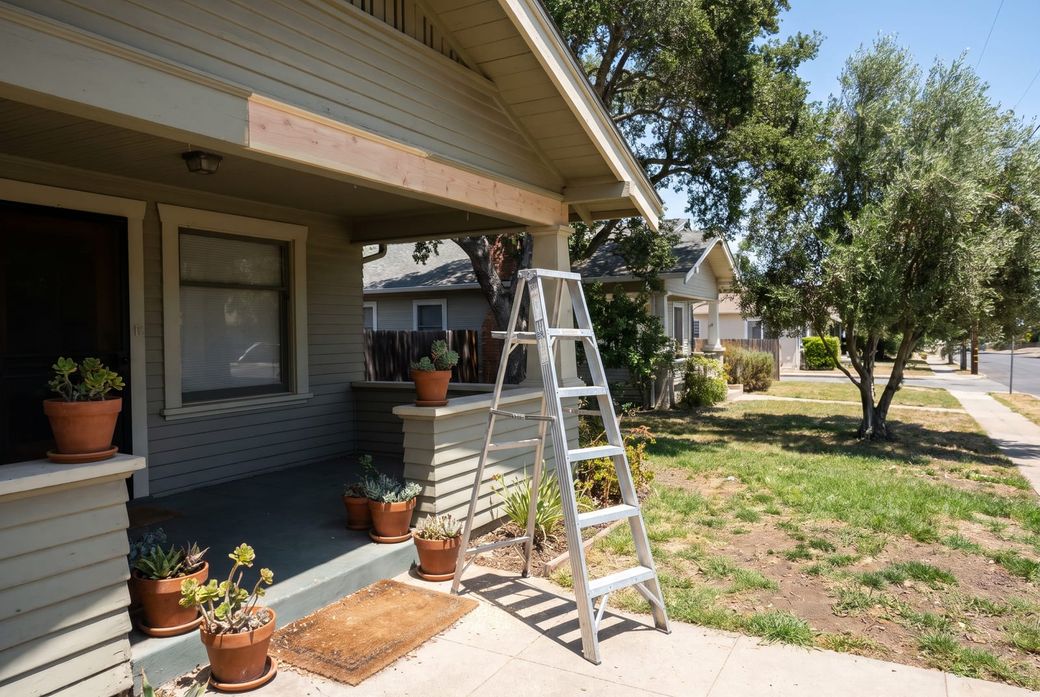
On older houses in town, the usual suspects are porch beams, fascia ends and the bottom of garage door trim. They catch the sun, then the rain, then the termites.
Repairs During a Sale
Escrow runs on a clock. If a report calls for wood repair, email it along with your request so the repair list matches the items the buyer is reading. Reports usually keep active damage apart from conditions that could cause it later, and only the first kind tends to hold up a closing.
Replace It or Leave It?
Does damaged wood always need replacing?
No. Shallow galleries in a piece that carries no load can often be filled, sealed and painted. Wood that holds something up, such as a sill plate, a joist or a beam, gets replaced or reinforced once it has lost real thickness. Size and job decide it, not looks.
How do repairs relate to treatment?
Treatment stops the pest; repair restores the wood. Do them in that order. New lumber set beside a live colony is just the next meal. When the only infested wood is the piece coming out, cutting it out may be the treatment.
Will a patch be visible?
Raw lumber is, until it’s painted. Trim and siding can be matched in profile so the line disappears under paint. Structural pieces are usually hidden anyway, under the floor or behind the finish.
Where can I see the kind of jobs you get?
Recent Work has photos from the field, grouped by what we were called out for.