
Termite Control
Found wings on the sill or a little pile of grit under a beam? Good catch. We find out which termite you have, treat that one, and look at the wood it left behind.
The kind matters more than anything else. Subterranean termites live in the soil and commute to your house. Drywood termites live inside the lumber and never touch the ground. A treatment that stops one can do nothing at all to the other, so the first job is always to get a good look.
That look covers the crawl space, the attic, the eaves and the foundation line, inside and out. You’ll hear what turned up, which treatments fit, and what upkeep keeps the next colony from settling in.
Three Termites, Three Habits
All three live on the Central Coast. The first two do nearly all the damage in houses.
| Termite type | Signs | Where found in a building |
|---|---|---|
| Subterranean | Pencil-wide mud tubes on concrete, mud packed inside hollow wood, wings after a warm day that follows rain | Foundation walls, sill plates, subfloor, slab cracks, garage framing, anything wooden that touches soil |
| Drywood | Hard, six-sided pellets in small heaps, pin-size kick-out holes, wings on late-summer and fall afternoons | Eaves, fascia, attic rafters, window and door frames, hardwood floors, old furniture |
| Dampwood | Big winged termites near lights, wet wood that crumbles in your hand | Stumps, leaking decks, siding under a bad gutter; sound dry framing is safe from them |
Treating Subterranean Termites
These termites need moisture and a route from the soil, so the treatment goes where they travel. The usual work is a treated zone in the soil along the foundation: a shallow trench outside, the same along the inside of a crawl space, and small drilled holes where a slab or patio sits against the wall. Tubes get broken open to see whether they’re active.
Half the cure is dry ground and clear wood. Drains that empty at the wall, mulch piled over the siding and form boards left under the house all feed the next colony. You’ll get that list along with the treatment.
Treating Drywood Termites
A drywood colony is small, slow and tucked inside one piece of wood. When it’s in a spot we can reach, a local treatment into the galleries can handle it. When pellets turn up in several rooms, or in walls nobody can open, the trade’s answer is a whole-house treatment. Between the two sits removal: sometimes the simplest fix is to cut out the piece and put in new.
Either way the bad wood gets a look of its own. See Repairs for how that part goes.
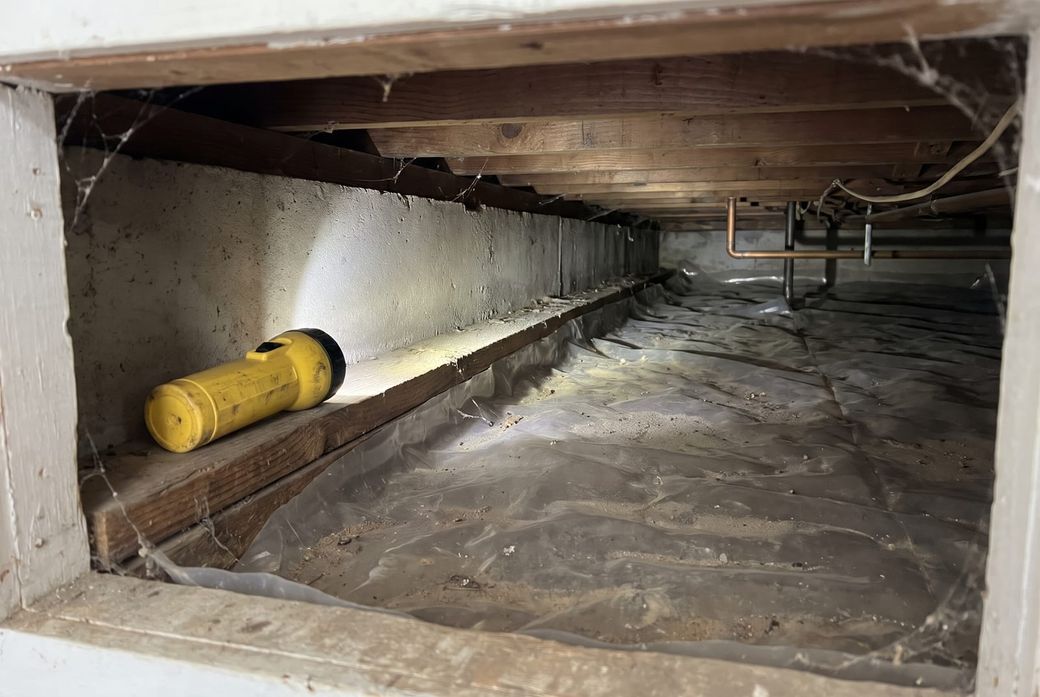
Signs of Termite Activity
- Mud tubes. Brown, pencil-wide lines up a foundation, a pier or a garage wall.
- Discarded wings. All one size, in a drift on a sill, in a spider web or under a light.
- Frass pellets. Gritty, like coarse pepper or sand, and back again after you sweep.
- Hollow-sounding wood. Tap along a baseboard with a screwdriver handle and listen for the change.
- Stuck doors and windows. Often just damp weather. Worth a look when one frame binds and its paint has blistered.
Leave the evidence where it is. Pellets and wings in place show which piece of wood they came from, and that saves a lot of guessing. Not sure it’s termites? A termite inspection settles it.
Drywood or Subterranean?
What is the difference between subterranean and drywood termites?
Where they live. Subterranean termites nest in soil and build mud tubes to reach wood, so they show up low. Drywood termites live in the wood itself, need no soil and push out dry pellets, so they can show up anywhere from the eaves to a chair leg.
How do you choose a treatment type?
By the termite, how far it has spread and what we can reach. One drywood spot in an open rafter is a small job. Pellets in three rooms is a bigger one. Subterranean tubes send us to the soil line. You’ll hear the options side by side, with what each one does and doesn’t do.
Do I have termites or winged ants?
Look at the waist and the wings. Termites have a straight body and four wings of equal length. Winged ants have a pinched waist and longer front wings. Keep a few in a jar for the visit.
Can I wait until after the holidays, or after the sale?
Termites work slowly, so a few weeks rarely change much. A sale is different: buyers and lenders often want the written report early, so book the inspection as soon as a closing date is on the calendar.