
Rodent Control & Exclusion
Scratching in the ceiling at night? Let’s find the door they’re using and shut it. Trapping empties the house. Exclusion keeps it empty.
Mice and rats get in because there’s a hole, and the hole is usually smaller than you’d think. A young mouse can squeeze through a gap as wide as a dime. A rat needs about a quarter. Exclusion means finding every one of those openings, from the roofline to the crawl space, and closing it with something teeth can’t get through.
The same goes for birds. Sparrows, starlings and pigeons love an open eave, a missing vent cover or the gap over a porch light, and bird exclusion work keeps them out of those tight spots.
Who’s in There?
Droppings and noise usually name the guest before anyone sees it.
| Rodent | Signs | Typical entry points |
|---|---|---|
| Roof rats | Half-inch, pointed droppings; scurrying overhead after dark; hollowed oranges or gnawed fruit on the tree | Attic vents, gaps where rooflines meet, utility lines, branches touching the roof |
| Norway rats | Three-quarter-inch, blunt droppings; burrows along the foundation; greasy rub marks low on walls | Crawl space vents, broken screens, gaps under garage doors, open pipe holes |
| House mice | Rice-grain droppings in drawers and cabinets; shredded paper; chewed food bags | Gaps around pipes under sinks, door corners, weep holes, dryer vents |
| Ground squirrels | Open burrows and mounds in slopes, lawns and along fences, busiest by day | They dig outside rather than move in. Describe the burrows on the call and ask what can be done |
Gaps and Entry Points to Check Around Your Home
- Foundation and crawl space vents: look for torn or rusted screen.
- The bottom corners of the garage door, where the rubber curls up.
- Holes where pipes, cables and gas lines enter the wall.
- The crawl space access cover: does it sit flat, or lean there?
- Eaves and gable vents, and the gap where one roof dies into another.
- Trees and vines within a jump of the roof.
- Pet doors, dryer vents and the space under side doors.
Walk it at dusk with a flashlight. Dark rub marks, a few hairs or a path through the dust tell you which gap gets used. For the fittings themselves, see Installations & Replacements.
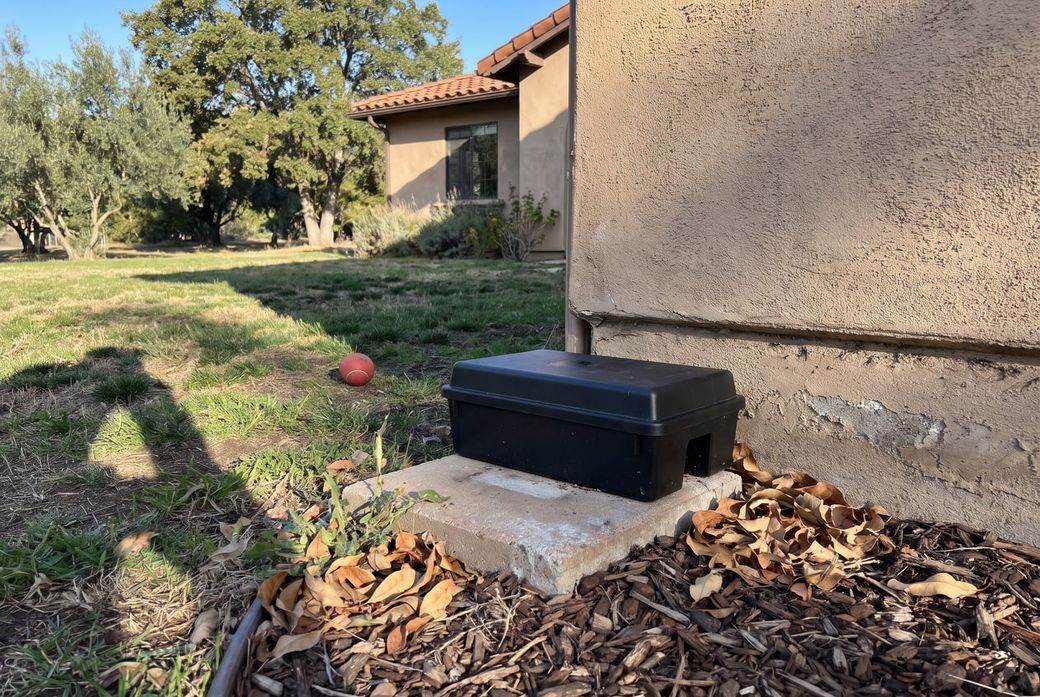
Squirrels, Birds and Other Uninvited Tenants
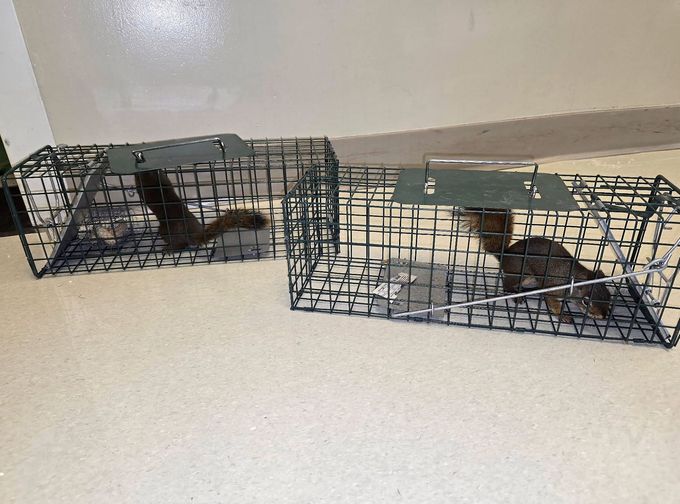
Live traps have their place with squirrels, and California has firm rules about what happens to a trapped animal, so it isn’t a do-it-yourself weekend. Closing the hole behind them is the part that lasts.
Birds run on a calendar. An active nest of a wild native bird is protected by federal law, so eaves and vents get closed after the young have flown or before building starts. House sparrows, starlings and pigeons are the exceptions. Netting, screen and fitted blocks keep them from coming back to the same ledge next spring.
If something is loose in the living space right now, skip to Urgent Service.
Seal First or Trap First?
Why does sealing entry points matter as much as trapping?
Because an empty attic is an advertisement. Rats and mice follow scent trails, so a house that held a family of them keeps drawing new ones through the same opening. Traps take out the ones inside. Sealing ends the parade.
What about the droppings and the insulation?
Don’t sweep or vacuum dry droppings: the dust is the hazard, deer mice above all. Air the space out, wear gloves, wet everything with disinfectant and wipe it up. Matted or soiled insulation comes out after the house is sealed, never before.
Will I smell it if one dies in a wall?
Maybe, for a week or two. That’s one good reason to trap inside the house instead of scattering poison there.
Can I seal the holes myself?
Some of them. Steel wool or copper mesh packed into a pipe gap and covered with sealant works well. Expanding foam alone doesn’t: they chew right through it. Leave roofline gaps and one-way exits to someone with a ladder and a plan.